Last updated: August 11, 2026
- Adults need 7–9 hours of sleep regardless of shift pattern; the biological requirement does not shrink because you work nights.
- Foam earplugs rated 33 dB NRR are the highest attenuation widely available; real-world reduction is typically 15–25 dB due to insertion error.
- A single narrow gap in a window seal can reduce a wall’s effective sound-isolation performance by up to 10 dB.
- White noise is most effective at 65 dB — roughly the volume of a quiet shower; above that, you risk trading one noise problem for another.
- A dedicated white noise machine (e.g., LectroFan or Marpac Dohm) costs £25–£50; high-NRR foam earplugs cost £8–£12 for a multipack.
- Structural (impact) noise — footsteps, drilling — bypasses room sealing entirely; earplugs or sleep headphones are the only personal mitigation.
- Extended daily earplug use can cause earwax buildup over time; consult a GP or pharmacist about ear hygiene if you rely on them for 7+ hours every day.
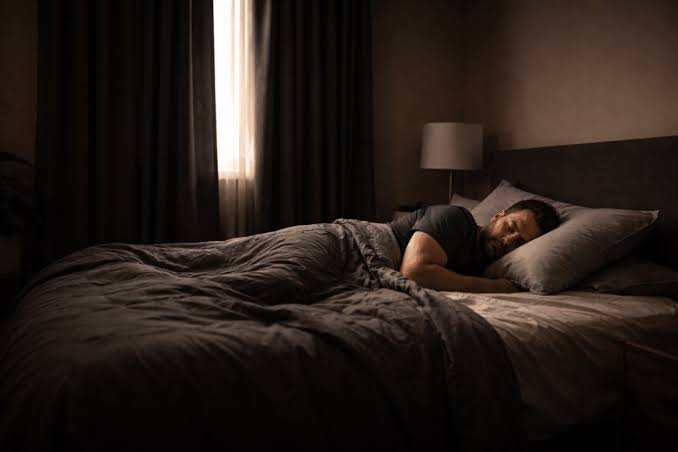
Darkness isn’t the hard part of daytime sleep — noise is. Your body reads a loud environment as a cue to stay alert, and that instinct fights you every morning you come home from a shift. Working nights and sleeping mornings means the whole world is running its loudest schedule precisely when you need silence most. Most people address this half-heartedly at best, and that half-measure is exactly why they’re still waking up two hours early.
What Actually Determines How Hard Your Daytime Noise Problem Is {#diagnosis}
Reach for earplugs or a white noise machine too quickly, and you’ll probably still wake up — because not all daytime noise behaves the same way, and the fix for one type actively fails against another. Diagnose first. Unsure whether your noise exposure is affecting your health? Consult a GP or occupational health professional; the NHS publishes general guidance on noise and sleep at nhs.uk/live-well/sleep-and-tiredness.
Three variables change everything:
1. Frequency of the sound. Low-frequency noise — lorries idling outside, bass thudding from a neighbour’s speaker, aircraft rumble — travels through walls and floors with almost no loss. High-frequency noise — birdsong, voices, a barking dog — is physically easier to block, but it’s more intrusive to the brain’s threat-detection system. That’s an awkward trade-off, honestly.
2. Intermittent vs. continuous noise. A steady hum is far easier to tune out than sounds that stop and restart without warning. Your brain habituates to constant noise; it simply cannot do the same with irregular bursts. Because of that asymmetry, a leaf blower that stalls and restarts every few minutes will drag you out of deep sleep, while a distant motorway drone usually won’t.
3. Airborne transmission vs. structural transmission. Sound travelling through air — gaps under doors, poorly sealed windows — responds to physical treatment. Sound conducted through the building’s structure — a neighbour drilling, footsteps pounding overhead — does not. No amount of draught-excluding tape stops vibration moving through concrete, and that distinction shapes every decision that follows. These are fundamentally different problems.
Quick check: Lie in your sleep space during peak daytime hours. Can you identify which direction the noise is coming from? Does it seem louder with your head near one wall? Yes to both signals airborne transmission — sealing and absorption will help. Feels like it’s emanating from everywhere at once? That’s structural, and the toolkit is different.
Street and Neighbour Noise Through Windows: Start Here {#street-noise}
Airborne noise through windows and doors is the most fixable problem, which is fortunate because it’s also the most common complaint among shift workers in urban housing.
Windows are often the weak point — though how much depends on building age, glazing type, and seal condition, so check before assuming the glass itself is the culprit. Research published in Applied Acoustics found that even a 1 cm² gap can slash a window’s effective sound isolation by up to 10 dB; the seal, not the glass, is usually where sound sneaks in. Most windows have worn perimeter seals, and even a sliver of a gap allows substantial sound transmission.
- Check the seal on every window in your sleep room. Hold a thin piece of paper against the frame while the window is closed. Movement means you have a leak. Foam draught-excluding tape from any hardware shop costs £3–5 and takes under ten minutes per window.
- Add mass to the glass with heavy curtains — but hang them correctly. Curtains only reduce sound when they sit close to the glass and extend past the frame on all four sides. A curtain hung on a rail 20 cm from the window traps a reverberant air pocket that can actually amplify certain frequencies — the opposite of what you want. Floor-to-ceiling, wall-to-wall thermal blackout curtains (typically £30–£80) are the right call.
- Address the door. Interior bedroom doors tend to have hollow cores and a substantial gap at the bottom — both significant sound paths. A door sweep (the rubber strip that seals the bottom gap, available for under £10) makes a noticeable difference against voices drifting in from a hallway.
- Add absorption inside the room. Hard surfaces — laminate floors, bare painted walls, minimal furniture — create reverberation that amplifies every noise that does get through. Rugs, soft furnishings, and full bookshelves all help here. You’re not blocking outside sound; you’re stopping the room from making it worse.
- Mask what remains with broadband white, pink, or brown noise. A dedicated machine or a fan running at constant speed creates a steady baseline that raises the threshold at which intermittent sounds rouse you. Pink or brown noise tends to be less wearing than pure white — both carry more energy in the lower frequencies and sound less harsh over a long sleep. The LectroFan (~£40) and Marpac Dohm (~£50) are well-regarded options; set either to roughly 65 dB, about the level of a quiet shower running in the next room.
Quick check: After sealing windows and hanging heavy curtains, sit quietly in the room for two minutes during the noisiest part of the day. Still hearing conversations clearly from outside? More sealing work is needed before a white noise machine will do much good. Such a machine masks what remains after physical treatment — it doesn’t block sound on its own, and its effectiveness depends heavily on both the noise type and the level you’re dealing with. Noise is significantly disrupting your sleep on a regular basis? Speaking with a GP or sleep specialist is worth your time; the National Sleep Foundation has accessible guidance on noise and sleep quality.
The Honest Trade-Off Table: Noise-Blocking Options {#trade-off-table}
With that diagnostic framework in place, the table below matches common shift-worker scenarios to the most reliable approach. The “best path” column reflects what tends to work for most people in each situation — individual results vary, especially for structural noise, and a professional acoustic survey is worth considering when the problem is severe.
| Situation | Most Reliable Path | Why Other Options Often Fall Short |
|---|---|---|
| Traffic and street noise through a standard window | Seal gaps, add heavy curtains, use white noise machine at ~65 dB | Earplugs alone cannot compensate for a room that is reverberant and poorly sealed |
| Neighbours above (footsteps, scraping chairs) | Earplugs or over-ear sleep headphones; rugs on your ceiling won’t help unless they use rugs above | White noise partially masks impact noise but cannot eliminate it; room sealing has no effect on structural transmission |
| Shared house with daytime housemates | Combination: door sweep + door seal strip + white noise machine at the highest effective volume | Earplugs alone won’t handle a door opening nearby; conversation travels through hollow doors easily |
| Construction noise nearby | 33 dB NRR foam earplugs plus white noise on top; shifting sleep later in the day when work stops may also help | No passive room treatment handles intermittent high-impact construction noise reliably |
| Partner or child noise inside the home | Negotiate a sleep window, use white noise, consider sleep headphones for the most critical hours | This is primarily a coordination problem; physical solutions only go so far |
Done Everything Right and Still Waking Up? Use Earplugs Correctly {#earplugs}
Once the room is as quiet as it can be made, earplugs are the most effective and cheapest personal noise-blocking option available — and most people use them wrong.
The noise reduction rating (NRR) printed on a box of foam earplugs is a laboratory figure measured under ideal insertion conditions. Real-world attenuation runs 15–25 dB — meaningfully lower than the stated 33 dB — primarily because most people don’t push foam earplugs in deeply enough to form a proper seal. That gap between the label and reality is almost entirely a technique problem.
The correct method for cylindrical foam earplugs:
- Roll the earplug between your fingers until it’s compressed into the smallest cylinder you can manage.
- Reach over your head with your opposite hand and gently pull the top of your ear upward and back — this straightens the ear canal.
- Insert the rolled plug quickly and hold it in place with your fingertip for 20–30 seconds while it expands to fill the canal.
- Seated deep enough, you should barely see the earplug when looking straight into a mirror.
- Cup your hands over both ears to check the seal: a significant change in noise level means it’s not seated properly.
For shift workers dealing with high-noise environments, 33 dB NRR foam earplugs are the standard recommendation. 3M Classic and Mack’s both make widely available options in this rating, typically £8–£12 for a multipack — well, usually £8–£12; prices vary by retailer.
The honest drawback: relying on earplugs for 7 or more hours every day can cause earwax buildup over time, which itself impairs hearing and comfort. A GP or pharmacist can advise on ear hygiene — this is a real, manageable downside worth knowing about before you’re six months in.
When the Standard Advice Breaks Down: Edge Cases {#edge-cases}
1. You live next to a bus route or railway line.
Intermittent impact events — a bus accelerating hard, a train thundering past — are qualitatively different from steady traffic hum. Such machines struggle here because each event peaks above the masking level. The combination that actually works: 33 dB NRR foam earplugs plus white noise running simultaneously. The earplugs cut the peak, and the white noise handles residual sound that gets through. Neither alone is enough; together they compound.
2. You share a room and your partner is awake during your sleep hours.
Physical treatments don’t fully address social noise — the brain responds to human voices differently than it does to environmental sound, and masking is less reliable here. A GP or sleep specialist can offer personalised strategies if social noise is chronically disrupting your sleep; the National Sleep Foundation has accessible guidance on managing sleep in shared environments. Earplug-plus-sleep-headphone combinations exist (thin in-ear earphones that play white noise independently), but the most reliable fix is agreed quiet hours covering the first block of your sleep — typically the three to four hours after you arrive home. Disruption in the second half of sleep is physiologically less damaging than disruption early on.
3. Your noise problem is inside your own head — tinnitus or hypervigilance.
Night shift workers, especially those in high-stress roles, can develop a state where external noise levels aren’t really the primary issue: the brain has become vigilant and interprets any sound as a threat. Running a noise machine helps here for a different reason — it’s not masking external sound so much as giving the auditory system something neutral to process. Waking to sounds that wouldn’t have disturbed you a year ago is worth raising with a doctor. The National Sleep Foundation has accessible resources on hyperarousal and sleep.
4. You work rotating shifts, not fixed nights.
Your setup has to function in both directions. What blocks incoming sound also muffles your alarm. On rotating shifts, ensure your alarm is loud enough to cut through earplugs — or use a vibrating alarm under the pillow rather than relying on sound at all.
5. You rent and can’t make permanent changes.
Acoustic panels, heavy curtains, and door sweeps are all removable. The one genuinely effective intervention that’s typically off-limits in rentals — secondary glazing — actually has a removable version: DIY window inserts built from a rigid frame and acoustic film, sitting inside the existing frame with no permanent fixing. They’re not as effective as proper double glazing, but they’re a real step beyond curtains alone.
6. Children in the home who can’t be asked to be quiet.
This is where sleep headphones — soft, flat speakers embedded in a fabric headband, available for £20–£50 — genuinely earn their place. They let you play white noise at a comfortable volume without the soreness of foam earplugs worn across a long sleep. Not everyone finds them comfortable (some people find them warm or constricting after an hour or more), but for parents trying to block daytime noise in a home with young children, they’re often the most practical tool alongside agreed quiet windows. The Sleep Health Foundation publishes guidance on managing sleep in difficult home environments that’s worth reading.
£50 or Less to Spend Right Now: Where to Start {#budget}
Budget matters, and the interventions above vary widely in cost. Here’s what to prioritise if spend needs to stay low — ordered by impact per pound:
- £3–5: Foam draught-excluding tape. Seal every window and the door frame. Per pound spent, this is the highest-impact intervention available for blocking daytime noise.
- £8–12: A multipack of 33 dB NRR foam earplugs. 3M Classic or equivalent. Learn to insert them correctly before judging them — insertion technique accounts for most of the gap between the stated rating and what you actually experience.
- £20–30: A white noise app or a basic dedicated machine. Free apps on a phone work fine as long as notifications are disabled for the duration. A dedicated machine — typically £25–£50 — is preferable when notifications are a disruption risk in themselves.
- Remaining budget: A door sweep. Under £10 at most hardware shops. The gap at the bottom of a bedroom door is acoustically significant and almost universally overlooked.
One item I’d actively skip at this budget: acoustic foam panels marketed toward recording studios. That material treats sound within a room — reverberation, reflections — rather than stopping sound from entering. Shift workers buy these expecting them to block outside noise; they don’t. Largely a wasted purchase at this price point.
FAQ {#faq}
How many hours of noise-free sleep do night-shift workers actually need?
The standard adult recommendation of 7–9 hours applies regardless of when you sleep — the shift pattern doesn’t reduce the biological requirement. Getting those hours during the day is harder not because the body refuses to sleep, but because sleep architecture gets disrupted by noise even when you don’t fully wake. Fragmented sleep accumulates as a deficit regardless of total time in bed.
Is white noise safe to use every single day long-term?
At moderate volumes — around 65 dB, roughly the level of a quiet shower — there’s no established evidence of harm from regular white noise use in adults. Running it at high volumes to drown out significant external noise is a separate question: at that point you’re substituting one noise problem for another. Keep it at the lowest level that’s actually effective.
Do noise-cancelling headphones work for sleeping?
Active noise cancellation (ANC) works best against low-frequency, steady sounds — aircraft engines, road hum. Against voices, sudden impacts, and high-frequency sounds, it’s considerably less effective. Over-ear ANC headphones are also physically uncomfortable to wear lying down across a 7–9 hour sleep. For sleeping, passive isolation via earplugs or flat sleep headphones is usually the more practical route.
Can you train yourself to sleep through noise?
To a degree. The brain does habituate to predictable, non-threatening sounds over days and weeks. What it doesn’t habituate to is novel or intermittent noise — particularly anything associated with danger or social demands: voices, a crying child, an alarm. Physical treatment is more reliable than adaptation for those specific categories.
Is there any point in talking to a landlord about noise from another flat?
Absolutely — especially when the noise constitutes a statutory nuisance, a legal definition that varies by jurisdiction but generally covers noise that materially interferes with ordinary use of your home. The landlord, the local council, or both may have obligations to act. Environmental health services in most UK and Australian local authorities run a formal process for exactly this. Pursue it alongside the physical fixes above, not as a substitute for them.