When Shift Workers Should Avoid Bright Light Before Day Sleep

Last updated: November 01, 2026
Key Takeaways
- Bright light matters most in the final 1 to 3 hours before daytime sleep after a night shift.
- Shift workers should start dimming light as their wind-down begins, especially in the last 60 to 180 minutes before sleep.
- A good light-avoidance routine begins before you come inside and finishes in the bedroom.
- Before day sleep, the best indoor light is dim, indirect, and easy to adjust.
Bright light should be avoided in the last 1 to 3 hours before day sleep if you are trying to fall asleep after a night shift. If you are asking, “When Should Shift Workers Avoid Bright Light Before Day Sleep?”, the practical answer is: start reducing bright light as soon as your wind-down begins, and get help from a sleep or shift-work professional if your schedule or sleep problem is more complex. The point of a light avoidance routine is simple: keep your brain from getting a “daytime” signal right before bed, then make the room feel dark enough that sleep can start.
The short answer: avoid bright light close to bed, not all light all day
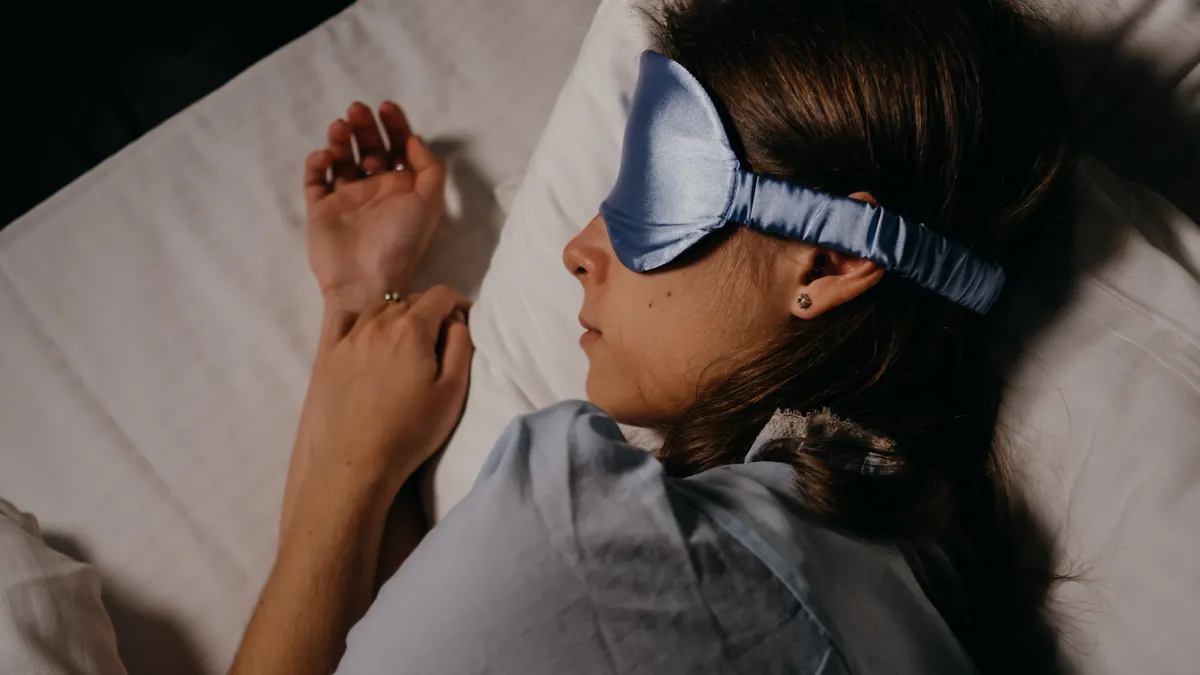
Bright light is most worth avoiding when it lands in the last stretch before sleep, especially the 1 to 3 hours after you get home from a night shift. That is the window when light is most likely to push your body clock toward alertness instead of rest.
The practical threshold is not a single magic lux number, because the effect depends on timing, spectrum, and your own light history. A well-lit kitchen, a sunny commute, or a phone glowing in a dark bedroom all send a stronger wake signal than low indoor light. For a shift worker heading to day sleep, the goal is not total darkness during the whole morning. It is to stop giving the brain a bright, “stay awake” cue right before sleep.
This is where people often go wrong: they think any light is forbidden, so they keep turning every lamp off too early and then stumble around stressed and overstimulated. That is not the target. The target is a controlled drop in light exposure as bedtime approaches. A dimmer switch can help here because it lets you lower household lighting gradually instead of making a hard cut from bright to black.
The rule is also different if you plan to stay up a little longer after the shift. If you are not trying to sleep until 10 a.m. or noon, a moderate light environment may be fine while you eat, shower, or commute. The mistake is saving bright LED light, a tablet on full brightness, and overhead lighting for the final 30 minutes before lying down.
For a broader explanation of light’s role in circadian timing, the hub guide to Light, Melatonin & Circadian Biology — The Complete Guide covers the biology behind this routine.
When should shift workers avoid bright light before day sleep?
Shift workers should avoid bright light as soon as they start their wind-down, and especially during the final 60 to 180 minutes before trying to sleep. That is the clearest answer to the timing question.
If you sleep soon after getting home, the cutoff should begin early. If you are home at 7 a.m. and want sleep by 8:30 a.m., treat the whole period between home and bed as a light-control window, and consider checking a clinician or sleep specialist if that schedule still leaves you wired. If you do not sleep until later, you still want the last 1 to 3 hours before bed to be dim. That usually means no strong overhead lighting, no bright bathroom mirror lighting, and no phone or tablet set to full screen brightness in a dark room.
The reason this timing matters is that light is not just “light.” A bright white LED panel at close range, a tablet inches from your face, or sunlight on the car ride home can all matter more than a small lamp across the room. A generic “keep it dark” rule misses this. The better rule is to reduce intensity and directness as sleep gets closer.
I would not recommend a rigid all-or-nothing schedule for every worker. A nurse finishing at 7 a.m. and sleeping at 8 a.m. needs a tighter light cutoff than a warehouse worker who gets home, eats, and sleeps at 1 p.m. The closer the sleep time is to the shift end, the more aggressively bright light should be cut.
A simple way to think about it: if the room looks like a normal daytime living space, it is probably too bright for the last hour before day sleep.
A light avoidance routine that actually fits a night shift

A light avoidance routine works best when it starts before you walk in the door and ends with the bedroom. The point is to reduce the “day” signal in steps, not in one dramatic switch.
-
Put on your shielding layer before the commute home. Use sunglasses or another form of commute shielding as soon as you leave the bright worksite if daylight is strong. The result should be less light hitting your eyes on the walk, bus ride, or drive home.
-
Keep indoor lighting low after you get home. Use the dimmest practical setting on LED lights, or swap to a lamp that throws light downward instead of across the whole room. If you need to move around, one shaded lamp is better than a bank of ceiling fixtures.
-
Set screens to the lowest workable brightness. On a smartphone or tablet, turn brightness down before you start scrolling, checking messages, or watching anything. Night mode helps a little with comfort, but low brightness matters more than a color filter alone.
-
Use the dimmer switch for the last hour. If your room has a dimmer switch, lower it gradually over 30 to 60 minutes. That creates a smoother transition and keeps the environment from feeling harsh when you are already tired.
-
Treat the bedroom like a low-light zone. Close blackout shades before you lie down so you are not fighting sun through the window while trying to fall asleep. If you are unsure how dark is dark enough, a sleep professional can help you judge whether your setup is practical. You do not need perfect darkness in every corner of the apartment, but the sleep space itself should feel visually quiet.
-
Stop “bright errands” right before bed. Do not save dishes, bill-paying, or a bright shower for the final 15 minutes. These tasks often keep lights on longer than planned and push sleep later.
That routine is practical because it uses ordinary tools: sunglasses, a smartphone setting, a tablet setting, LED lights, a dimmer switch, and blackout shades. None of those solves the problem alone. The point is the sequence.
A common trade-off shows up here. The darker you make your environment, the more careful you need to be about safety and comfort. You still need enough light to avoid tripping, cooking badly, or feeling anxious. That is why a low, directed lamp is usually better than total darkness before bed.
Indoor lighting choices that help, and the ones that backfire
The right indoor light before day sleep is dim, indirect, and easy to control. The wrong light is bright, overhead, and close to eye level.
LED lights are the most common troublemaker because they are often too bright for the last hour before sleep, especially in kitchens and bathrooms. A ceiling fixture can make the whole room feel “on,” which is useful for cleaning or getting ready but not useful when the goal is to fall asleep after a night shift. A lamp with a shade is usually easier on the body than a bare bulb.
A dimmer switch is one of the simplest fixes if your home lighting supports it. It lets you bring the room down to a lower level without changing the bulb every time. If you cannot install one, choose a lamp with multiple brightness settings or use only one small light source at a time.
Blackout shades matter because light avoidance does not stop at bedtime. If daylight is pouring into the room at 9 a.m., bright indoor light in the 30 minutes before sleep may not be the only problem. Sunlight through windows can keep the room biologically “daylike” even when you have already dimmed the lamps. In that case, the room needs both lower indoor light and blocked outside light.
A useful distinction: warm light can feel calmer, but warmth alone is not a free pass. A warm-colored bulb at high brightness can still be too much before sleep. The better question is not “Is it warm?” but “Is it bright, direct, and close to my face?”
What backfires most often is trying to power through normal household brightness because it is convenient. That usually means longer sleep latency, more tossing, and a bedroom that never quite feels like a sleep space. You do not need to turn the home into a cave. You do need to stop using it like an office at the end of a night shift.
Screens before daytime sleep: what matters most
Screen brightness matters more than the device itself before daytime sleep, and the most useful move is to dim the screen early. A smartphone or tablet can be part of a wind-down routine if it is kept low and used briefly.
The mistake is assuming that “night mode” solves the problem by itself. Color-shift settings can make the display feel less harsh, but brightness still drives a lot of the light exposure. A tablet at full brightness in a dark room is a poor choice if you are trying to sleep within the hour. A phone at low brightness, held at a reasonable distance, is less disruptive.
A few practical rules help:
- Lower brightness manually before you start using the device.
- Avoid holding the screen inches from your face.
- Keep use short and functional.
- If you can, switch from scrolling to audio or a non-screen task during the last 30 minutes.
This is also where timing beats perfection. If you have to use a smartphone to coordinate family, transit, or alarms, that is not automatically a problem. The problem is prolonged, bright, high-contrast use right up until lights out. A quick check of messages is one thing; an hour of bright video is another.
For many shift workers, a workable compromise is to use the screen early in the wind-down and then put it away. That gives you the convenience without letting the display become the last thing your eyes see before sleep.
Common mistakes that make the routine fail
The most common mistake is waiting until you are already in bed to manage light. By then, the bright exposure has already happened, and the brain may be more alert than it should be.
Another mistake is treating all bright light the same no matter when it happens. Light on the commute home is not identical to light in the final 20 minutes before sleep. The last stretch matters most, which is why the routine needs a cutoff, not just a general preference. If you are not sure how strict to be, a clinician or sleep professional can help tailor the cutoff to your shift pattern.
A third mistake is relying on one tool and expecting it to do everything. Blackout shades help, but they do not cancel a bright smartphone held close to your face. A dimmer switch helps, but it does not fix sunlight flooding through an open window. The pieces work together.
A fourth mistake is making the environment so dark that normal tasks become difficult. If you are bumping into furniture or fighting to see the bathroom, the routine has gone too far. The fix is not to abandon light avoidance; it is to use a small, low lamp and keep pathways clear.
The trade-off here is real: the more you control light, the more planning it takes. That is the cost. The payoff is usually a smoother transition into day sleep and less of the “tired but wired” feeling that bright light can leave behind.
Light control is not the only thing that affects daytime sleep. Noise, caffeine timing, room temperature, and shift timing all matter too. Bright light avoidance can help, but it is not a full sleep system by itself.
When a stricter approach makes sense, and when it does not
A stricter approach makes sense if you need to sleep soon after your shift, struggle to fall asleep for more than 30 minutes, or live in a bright home with daylight coming through windows. In those cases, it is reasonable to cut bright light earlier and more consistently.
A looser approach can be fine if you have a long buffer before sleep and your wind-down is calm. If you get off work in the morning but do not sleep until later in the day, you may only need to manage the last hour or two before bed rather than every minute after the shift.
It does not make sense to obsess over one room light while ignoring the bigger picture. If your commute is 45 minutes in direct sun and your bedroom still has an uncovered window, solving only the tablet brightness is the wrong priority. Start with the biggest light sources first.
This is a routine, not a test. The goal is not to prove you can live in darkness. The goal is to stop bright light from making daytime sleep harder than it already is. That is why the routine belongs in the category of practical sleep hygiene, not punishment.
If you want the underlying physiology behind why timing matters, the linked hub on Light, Melatonin & Circadian Biology — The Complete Guide gives the broader framework without turning this page into a reset protocol.
How much light is too much before day sleep?
Bright light in the last 1 to 3 hours before bed is usually too much if you are trying to sleep after a night shift. The exact threshold varies, but the practical rule is simple: if the room feels like daytime, it is likely too bright. Lower screen brightness, dim indoor lights, and block outside light during that final window.
Should I dim lights before sleeping after nights?
Yes, dim lights before sleeping after nights. The last 60 to 180 minutes before sleep are the best time to reduce indoor brightness, use a dimmer switch if you have one, and avoid strong LED lights overhead. A gradual fade is easier to live with than a sudden blackout and usually works better as a routine.
Does screen light matter before daytime sleep?
Yes, screen light matters before daytime sleep, especially when brightness is high and the device is close to your face. A smartphone or tablet on low brightness is less of a problem than a bright screen in a dark room. Night mode can help with comfort, but brightness and timing matter more than color alone.
Drafted with AI; not yet reviewed by a person.