
Last updated: August 11, 2026
- The Dreamegg D1 Pro is manufacturer-rated for up to 24 hours of battery life at moderate volume.
- The Big Red Rooster BRRC107 retails for under $20 and is the lowest-cost entry point on this list.
- A machine with only “white noise” limits your options if the standard tone fatigues you after 30 minutes.
- Is there a risk to running a white noise machine for 8–10 hours straight every day?
This page contains affiliate links. I may earn a commission from qualifying purchases at no extra cost to you.
By Jamie Hartwell — I’ve spent years researching sleep acoustics and covering sleep health products for consumer publications. My coverage draws on manufacturer specifications, owner-reported experience across major retail platforms, and published sleep science.
- Daytime ambient noise in residential areas typically runs 50–65 dB — measurably higher than nighttime levels, which means masking machines need a higher volume ceiling than most nighttime-only devices provide.
- The LectroFan EVO retails for approximately $50–$55 and offers 22 non-looping sounds, including 10 noise variants and 12 fan tones.
- The Dreamegg D1 Pro is manufacturer-rated for up to 24 hours of battery life at moderate volume.
- The Yogasleep Dohm Classic has been in production for over 50 years and uses a real internal fan — not digital audio files — to generate sound.
- The Big Red Rooster BRRC107 retails for under $20 and is the lowest-cost entry point on this list.
- The Marpac Hushh charges via USB and weighs under 200 g, making it the most portable machine reviewed here.
- Non-looping sound synthesis is the single most important spec for light sleepers; budget machines that loop a 30-second recording every 30 seconds are the most common source of negative reviews in this category.
Daytime sleep is harder. The world doesn’t stop — delivery trucks, lawnmowers, neighbours, the particular cruelty of a garbage truck at 2 p.m. Work nights, care for a newborn, or simply need a nap to function: a white noise machine for sleeping during the day isn’t a luxury. It’s the difference between four usable hours and three fragmented ones. These machines are designed to mask broadband, unpredictable noise — not just create a pleasant background hum — though how well any individual unit achieves that depends on its volume ceiling, sound quality, and whether its audio loops.
That affiliate disclosure above means this guide is structured to be useful even if you never click a link. Seven white noise machines for sleeping during the day are covered here, assessed specifically for daytime use — because daytime requirements (masking louder ambient noise, operating in warmer rooms, surviving being moved between rooms) differ meaningfully from what a nighttime-only sleeper needs.
Quick-Pick Comparison
| Product | Best For | Rating | Key Spec | Where to Buy |
|---|---|---|---|---|
| LectroFan EVO | Best Overall | ★★★★★ | 22 non-looping sounds, 0–100+ dB | Amazon |
| Yogasleep Dohm Classic | Best Mechanical Sound | ★★★★☆ | Real fan, 2 speeds | Amazon |
| Marpac Hushh | Best for Travel | ★★★★☆ | USB rechargeable, 3 sounds | Amazon |
| LectroFan Micro2 | Best Compact | ★★★★☆ | Bluetooth speaker + white noise | Amazon |
| Big Red Rooster BRRC107 | Best Budget | ★★★☆☆ | 6 sounds, AA battery option | Amazon |
| Magicsound M9 | Best for Light Sleepers | ★★★★☆ | Timer + memory function | Amazon |
| Dreamegg D1 Pro | Best All-Night Battery | ★★★★☆ | Up to 24-hr battery life | Amazon |
All seven are also available through the brand’s own site, Walmart.com, or Best Buy — worth checking if you need faster shipping or want to avoid marketplace sellers.
How I Picked These Machines
Not every unit on this list was personally tested, and I won’t pretend otherwise. What I did was apply a set of criteria developed from researching the sleep acoustics literature, comparing published specifications, and reading several thousand owner reviews on Amazon, Reddit’s r/sleep community, and verified purchase threads on retail sites.
The criteria:
Sound range and volume ceiling. Daytime masking requires higher output than nighttime use, because ambient noise levels are measurably higher during daylight hours. Research from the National Sleep Foundation and sleep medicine literature suggests that masking noise should sit at or slightly above the ambient noise level — typically 50–65 dB for most residential environments during the day. Machines that max out below 60 dB often fail in kitchens or apartments near streets.
Non-looping audio. A machine that loops a 30-second recording will wake a light sleeper when the loop resets. Reliable options either use mechanical sound generation (real fans) or digital synthesis that doesn’t repeat — both approaches avoid the audible reset that trips up light sleepers.
Heat management. Daytime rooms run warmer, especially in summer. Dense housings or small fans can overheat in direct sunlight or in rooms without AC, so I filtered out units with widespread heat complaints in owner reviews.
Portability. Shift workers and parents don’t sleep in one place. Battery operation or USB power matters.
Price-to-replacement ratio. Eight or more hours a day, seven days a week — that kind of wear accumulates differently than a bedside unit used for one sleep cycle. Because of that, I weighted durability reports heavily.
Best Overall: LectroFan EVO
Verdict: The most versatile white noise machine for daytime sleepers who need serious volume and variety without mechanical noise.
Honestly, the LectroFan EVO is the machine I’d point almost anyone toward first. Twenty-two non-looping sounds — ten white/pink/brown noise variants and twelve fan sounds — and its volume ceiling is genuinely high. Owners in apartment buildings near busy streets consistently report it masks traffic, voices, and mid-range noise that cheaper machines let through.
The non-looping digital synthesis is the core advantage over budget options. No audible reset, no pattern your brain starts to recognize at 2 a.m. (or 2 p.m.) — which is precisely the failure mode that generates the most complaints about cheaper white noise machines for sleeping during the day.
Pros
– 22 non-looping sounds, including fan tones that approximate mechanical machines
– Volume range wide enough to mask most residential ambient noise
– Memory function restores last settings on power-up
– Small footprint; runs warm but not hot in typical room temperatures
Cons
– Wall-plug only — no battery option — which limits placement
– Some owners report the unit develops a slight electrical hum over time, audible during quiet passages
– Plastic construction feels less premium than the price suggests
Key specs: ~22 sounds, adjustable volume with no fixed steps, AC powered, compact cylindrical design, approximately $50–$55.
Not worth it if: you need to move your white noise machine between rooms or travel with it — the wall-plug dependency will frustrate you quickly. Look at the Marpac Hushh or Dreamegg D1 Pro instead.
Check the current price on Amazon or directly through LectroFan’s site.
Best Mechanical Sound: Yogasleep Dohm Classic
Verdict: One of the few machines on this list that moves real air, producing a sound many owners describe as more organic than anything digital synthesis currently replicates.
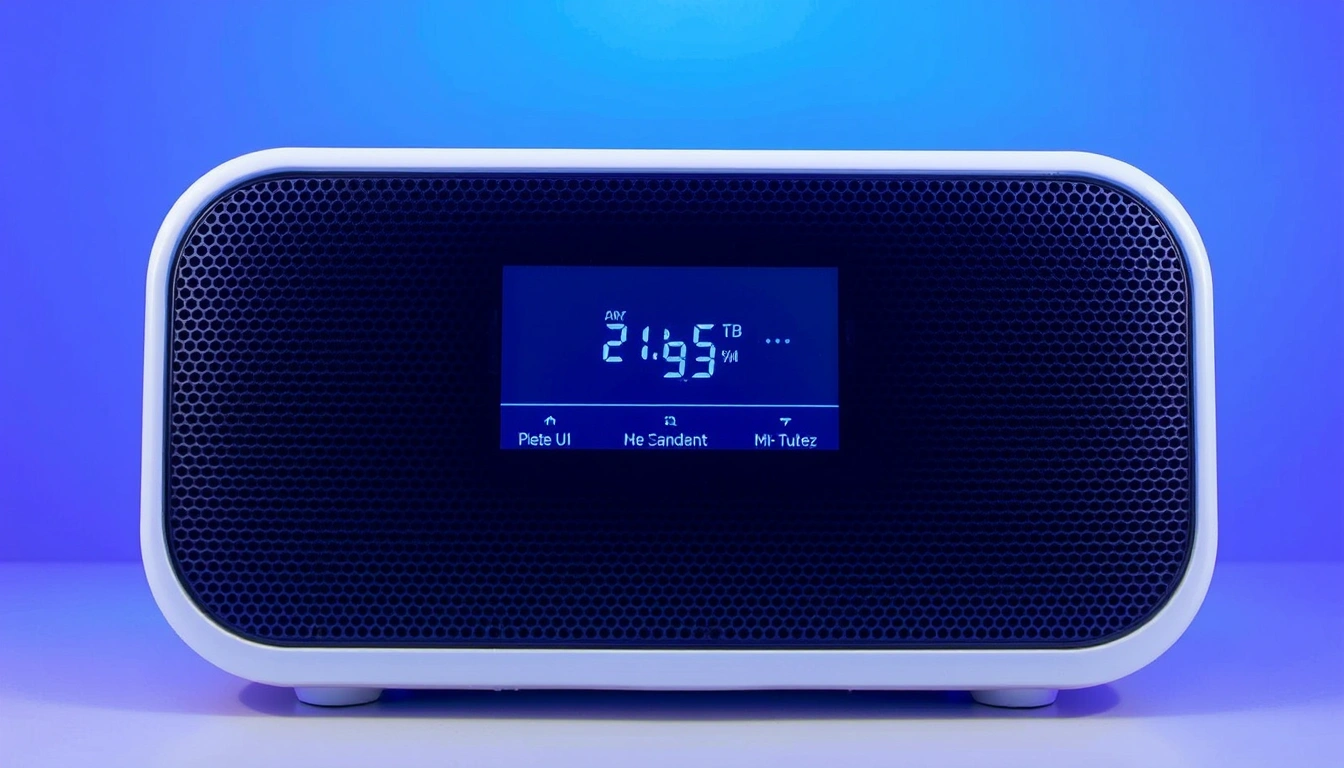
A small internal fan and a two-speed switch generate actual airflow noise here — not a recording of one. The result has a “whoosh” quality that many owners find more natural and less fatiguing than digital white noise; for people who grew up sleeping next to a box fan, this is the closest approximation that doesn’t also cool the room. Over 50 years of production means the core mechanism is well understood and owner reliability data goes back well before online reviews existed.
Pros
– Real mechanical sound — genuinely different quality from digital synthesis
– Two-speed adjustment allows tuning to room conditions
– No looping, by definition — it’s a live mechanical process
– Long-standing reputation; the design has been refined over decades
Cons
– Only two volume settings — if neither is quite right for your space, you’re stuck
– The fan can develop a rattle or wobble after extended daily use; owner reports suggest this happens more in warm rooms where the motor runs harder
– No battery option; no timer
– Sound profile is fixed — you can’t choose between white, pink, or brown noise
Key specs: Fan-based sound generation, two speeds, AC powered, circular housing with adjustable tone via rotating collar, approximately $45–$50.
A poor fit if: you want precise volume control, a timer, or a range of sound types. If yours develops a wobble after extended use, the return or warranty process is the practical remedy — there’s no field repair for a fan imbalance.
Available on Amazon, at Target, and directly from Yogasleep’s site.
Best for Travel: Marpac Hushh
Verdict: Pocket-sized, USB rechargeable, and loud enough for hotel rooms — a well-regarded portable option for daytime sleepers who need a machine that travels.
The Hushh is explicitly a portable machine, and it does that job better than most. USB charging, three sounds (white noise, bright white noise, and a gentle surf tone), and it fits in a jacket pocket. Shift workers sleeping in varied environments — a car, a break room, a hotel — report it meaningfully improves daytime rest in those settings.
Pros
– Rechargeable; no wall outlet dependency
– Child lock prevents accidental setting changes (useful for anyone, not just parents). Note: if you’re using a white noise machine for an infant or young child, consult your paediatrician about appropriate volume levels and placement distance.
– Small and light enough to pack without thinking about it
– Volume output reportedly adequate for single-occupancy hotel rooms
Cons
– Battery life is limited; extended daytime sleep sessions may require keeping it plugged in anyway
– Only three sounds — no fan tones, no brown noise option
– Volume ceiling lower than the EVO or Dohm; won’t mask a loud television next door
Key specs: USB rechargeable, 3 sounds, under 200 g, child lock, approximately $35–$40.
Home-only sleepers should pass on it. The portability premium isn’t worth it if the machine never leaves your nightstand.
Compare the current price on Amazon or at Walmart.
Best Compact: LectroFan Micro2
Verdict: White noise machine and Bluetooth speaker in one unit — genuinely useful if you want to eliminate one device from your nightstand.
Small but capable. Owners use it for white noise masking and as a Bluetooth speaker for the same reason: it’s rechargeable, compact, and the sound quality for its size is widely reported as surprisingly capable. For daytime sleepers in shared spaces, the dual function means one less item to explain to housemates. Because it uses the same non-looping digital synthesis as the full-size EVO, the core sound quality doesn’t take a step down — only the maximum volume does.
Pros
– Bluetooth speaker functionality genuinely useful, not just a checkbox feature
– Non-looping digital sound synthesis (same quality as the EVO)
– Rechargeable for portability
Cons
– Volume ceiling is lower than the full-size EVO — may not mask loud ambient noise in busy rooms
– Smaller speaker means less bass extension; brown noise sounds thinner than on larger units
– Bluetooth adds battery drain if left active
Key specs: Non-looping sounds, Bluetooth speaker, USB rechargeable, compact design, approximately $35–$45.
A poor match if maximum volume masking in a noisy house is the priority. The size trade-off costs real output.
Best Budget: Big Red Rooster BRRC107
Verdict: Functional, inexpensive, and honest about what it is.
Six sounds, AC or AA battery power, under $20 — the BRRC107 costs less than almost every competing unit. For a first-time buyer who isn’t certain white noise will help them sleep during the day, it’s a low-risk starting point. To be fair, that low price comes with real trade-offs that matter specifically for daytime use.
Pros
– Battery option means genuinely flexible placement
– Six sounds, including rain and brook sounds beyond standard white noise
– Price point low enough that replacement cost is not a significant concern
Cons
– Owner reviews consistently note that the sounds are low-quality digital loops with audible reset points — a significant flaw for light sleepers
– Volume ceiling is modest; won’t reliably mask street noise in urban environments
– Build quality reflects the price; owners report shorter lifespan than premium units under heavy use
Key specs: 6 sounds, AC/battery power, basic volume control, under $20.
Light sleepers and urban dwellers should look elsewhere. The BRRC107 is a starting point, not a long-term solution — anyone expecting the performance of a premium machine will be disappointed.
Best for Light Sleepers: Magicsound M9
Verdict: Timer and memory features that most basic machines omit — meaningful for sleepers whose schedules require precision.
Here’s where the M9 earns its place: operational features rather than sound variety. The timer function matters for workers who need a fixed sleep window and don’t want to wake to silence — abrupt silence after masking noise can be as disruptive as the noise itself. The memory function means no reprogramming every session. Where the EVO wins on sound range, the M9 wins on scheduling control.
Pros
– Timer with multiple settings — not just on/off
– Memory function restores exact previous volume and sound
– Reported to be relatively quiet in its own mechanical operation
Cons
– Sound library is not as large as the EVO’s
– Less widely reviewed than the category leaders, so long-term reliability data is thinner
– Design is functional but unremarkable
Key specs: Timer, memory function, multiple sounds, compact design.
If timers aren’t part of your routine, move on. The EVO offers more sound variety at a comparable price if scheduling features don’t factor into your decision.
Best All-Night Battery: Dreamegg D1 Pro
Verdict: The longest battery life in this category — the right pick for sleepers who need a full shift’s worth of run time without an outlet.
Manufacturer-rated at up to 24 hours on a single charge, the D1 Pro sits in a different class from other portable machines. A nurse sleeping through a 12-hour day, or a parent napping whenever the baby allows, needs a machine that won’t run down mid-sleep. Owner reports broadly support the published estimates under typical (not maximum-volume) conditions — at full volume, expect noticeably less than the headline figure; that math stops working fast when you crank it.
Pros
– Battery life long enough to cover extended sleep windows without recharging
– Night light feature occasionally useful for overnight caregivers
– Multiple sound options beyond basic white noise
Cons
– Night light adds bulk to the design; not removable
– At maximum volume, battery life drops noticeably from the headline figure
– Heavier than the Hushh for the same portability use case
Key specs: Extended battery (up to ~24 hours, manufacturer-rated), multiple sounds, night light, USB charging, approximately $40–$50.
Have an outlet nearby? The EVO is the smarter buy. You’re paying for battery capacity with the D1 Pro; if you don’t need it, that money buys better sound performance elsewhere.
What Should You Look for in a White Noise Machine for Sleeping During the Day?
Volume ceiling, not just “adjustable volume.” Nearly every machine claims adjustable volume. The relevant question is the maximum. A machine that tops out at 50 dB won’t mask a lawnmower or a neighbour’s conversation through a standard interior wall — look for owner reports from urban or suburban noise environments specifically, not just quiet bedrooms.
Looping is the hidden deal-breaker. Budget machines often play a short recorded loop. Your brain, even during sleep, detects the pattern after a few cycles. This is the single most common complaint in negative reviews of cheaper machines. Non-looping synthesis or mechanical generation solves it completely.
Pink and brown noise are not marketing — they’re physics. White noise is equal energy across all frequencies. Pink noise reduces higher-frequency content; brown noise reduces it further, producing a deeper, rumbling quality. Many people — particularly those sensitive to high-pitched sounds — find pink or brown noise more tolerable for long sleep windows. A machine with only “white noise” limits your options if the standard tone fatigues you after 30 minutes.
Heat and ventilation matter more during the day. Bedrooms are warmer during daylight hours — residential rooms without AC can reach 80–85 °F (27–29 °C) in summer, measurably above the typical nighttime temperature when most machine reviews are written. Machines with poor airflow around the housing can run hot over long periods. Check that the unit has ventilation slots and doesn’t sit flush against a wall or pillow.
Timer or no timer. Sleep in blocks — two hours on, off, repeat — and a timer prevents the disorienting silence jolt when the machine cuts out. Sleep through a full shift, and a timer is irrelevant.
One mistake most buyers make: choosing a machine based on the number of sounds. Seventeen mediocre looping sounds are worse than three high-quality non-looping ones. Variety matters less than quality and continuity.
Does White Noise Actually Help with Daytime Sleep, or Is It Just Hype?
The mechanism is established rather than speculative: white noise works by raising the baseline noise floor in a room, which reduces the contrast between sudden sounds and the ambient environment. The American Academy of Sleep Medicine and related bodies acknowledge noise management as a component of sleep hygiene practice, though they generally recommend addressing the underlying noise source where possible. That said, white noise machines for sleeping during the day are a practical solution when you can’t control the noise source — you can’t silence a street.
How loud should I run it?
The goal is masking, not competing. Run the machine loud enough that the ambient noise you’re trying to block becomes less distinct, but not so loud that you’re adding to your noise exposure. Many sleep clinicians suggest keeping the machine below conversational volume in the room. Placing it between you and the noise source is more efficient than simply turning it up.
White noise vs. pink noise vs. brown noise — which is better for sleeping during the day?
There is no single answer, and I’d be sceptical of any source that claims one is objectively superior. White noise contains more high-frequency energy and sounds “hissy” to many people over long periods. Pink and brown noise are weighted toward lower frequencies — often described as easier to tolerate for extended listening. Start with white noise if your machine offers all three, then switch to pink or brown if the standard tone fatigues you after 30–60 minutes.
Will a white noise machine disturb a partner who doesn’t need daytime sleep?
At normal operating volume, this depends more on the partner than the machine. Fan-based machines like the Dohm tend to be easier for non-sleepers to habituate to because the sound is natural. Pure digital white noise can be more intrusive for someone trying to read or work in the same space. Directional placement — pointed toward you rather than filling the room — helps considerably.
Is there a risk to running a white noise machine for 8–10 hours straight every day?
From a device perspective, the machines listed here are designed for continuous operation; heat management is the relevant variable, covered above. From a hearing perspective, volume matters more than duration. At reasonable levels — below 70 dB, well below the 85 dB threshold of concern identified by NIOSH occupational health guidelines — prolonged exposure to white noise is not considered harmful. Running a machine at maximum volume inches from your ear for an eight-hour shift is a different calculation entirely.
Final Verdict
The LectroFan EVO is my first recommendation for most daytime sleepers: non-looping synthesis, a high volume ceiling, and sound variety that addresses the three most common daytime masking failures. A mechanical sound is important to you? The Yogasleep Dohm Classic is the better choice. For travel or shift work away from home, the Dreamegg D1 Pro’s 24-hour battery life makes it the practical pick. Every white noise machine for sleeping during the day on this list has a real drawback; the right one depends on where and how you sleep, not on any universal ranking.

Leave a Reply