

Last updated: August 11, 2026
- The International Agency for Research on Cancer classified night shift work as a probable carcinogen (Group 2A) in 2007.
- But the population dealing with this is broader — approximately 15–20% of the workforce in developed countries works non-standard hours across these and related industries.
- Here’s what most general coverage of this topic misses: the gap between social jetlag and true circadian disruption.
- Still, it follows logically from what is already understood about digestive circadian biology.
Quick Answer: Circadian rhythm disruption occurs when your internal 24-hour clock falls out of sync with your actual schedule. Shift workers are most affected because the misalignment is chronic — not a single late night, but years of working during the body’s programmed rest phase. Roughly 15–20% of the workforce in developed countries works non-standard hours, and long-term night-shift work is classified by the International Agency for Research on Cancer as a probable carcinogen (Group 2A).
Key Facts
-
The body’s master clock, the suprachiasmatic nucleus (SCN), uses light to synchronise a roughly 24-hour biological cycle.
-
Melatonin normally rises at dusk and peaks between 2 a.m. and 4 a.m.; bright workplace lighting can suppress that rise within minutes.
-
The circadian drive toward sleep peaks between approximately 2 a.m. and 6 a.m. — the same window many night workers must remain alert.
-
Night shift work is associated in large cohort studies with elevated rates of cardiovascular disease, type 2 diabetes, and certain cancers.
-
The International Agency for Research on Cancer classified night shift work as a probable carcinogen (Group 2A) in 2007.
-
Rotating shifts are harder to adapt to than fixed night schedules because the anchor point moves with each schedule change.
-
Exogenous melatonin can help shift the sleep window when timed correctly, but evidence for improving total sleep duration is weaker.
-
The American Academy of Sleep Medicine has published clinical guidelines specifically on shift work disorder.
Your body runs a roughly 24-hour internal clock — and the moment your schedule contradicts it, the fallout reaches further than simple fatigue. That’s circadian rhythm disruption in a sentence. For nurses, factory operators, overnight drivers, and emergency responders, this isn’t an occasional inconvenience; it’s a sustained physiological condition playing out shift after shift, year after year. If you’re working outside the standard daylight window and sleep feels like a battle you keep losing, this article is for you. Before changing your sleep habits, medications, or health management, talk to a qualified healthcare professional about your specific situation.
How the Circadian Clock Actually Works
Found in virtually every cell of the human body, the circadian rhythm is a biological timing system older than most of the other machinery running inside you. Its master regulator — a small cluster in the hypothalamus called the suprachiasmatic nucleus, or SCN — receives light signals from the eye along dedicated nerve pathways and uses them to keep the body’s internal schedule anchored to the external day. Simple in concept. Staggeringly complex in practice.
From that light signal flows the coordination of melatonin, a hormone produced by the pineal gland that rises each evening, peaks through the night, and retreats before waking. Core body temperature, cortisol, digestion, immune function, cell repair — each traces its own circadian curve, all timed to the same underlying cue. The system hums along when light and schedule stay in step; when they diverge, the various rhythms drift apart at slightly different rates, a state researchers call internal desynchrony.
Here’s what most general coverage of this topic misses: the gap between social jetlag and true circadian disruption. Social jetlag — the mild mismatch millions experience between weekday and weekend schedules — typically runs one to two hours. Actual circadian disruption means working and sleeping at times that directly contradict the body’s strongest biological cues, often by six hours or more. Same phenomenon, radically different magnitude.
Because those biological cues centre on light, temperature, and meal timing, all three interact to set the clock’s position. A worker controlling only one variable — blackout curtains, say — leaves the other two still dragging the body toward daytime. Single interventions rarely solve this on their own; that partial control is exactly why.
Inside the Body When Circadian Rhythm Is Disrupted

Standing under fluorescent lights at 2 a.m. while the master clock is signalling sleep means several systems are running directly against their programmed state — simultaneously.
Melatonin suppression hits first. Blue-wavelength light, dominant in most workplace fixtures, tells the SCN it’s daytime and either blunts or delays the melatonin rise that would normally cue sleep. By the time the shift ends and sleep becomes possible, melatonin has often already started its natural decline — leaving sleep lighter, shorter, and harder to sustain than it should be.
Cortisol follows its own problematic curve. Designed to peak shortly after natural waking, it frequently arrives during a night worker’s intended sleep window — the body attempting to rouse someone at what it still considers morning, regardless of the clock on the wall.
Digestion runs on circadian time too. Insulin sensitivity, gut motility, and the hormones governing hunger and satiety all shift across the day; eating during the circadian night, as shift workers routinely do, is associated in research published in journals such as the Journal of Clinical Endocrinology & Metabolism with measurable changes in blood glucose regulation — though individual variation is considerable, and this isn’t a uniform finding.
Immune function operates on a similar schedule. Certain immune responses are calibrated to predictable timing, and sustained disruption is linked in several studies to altered immune markers. The Centers for Disease Control and Prevention and the National Sleep Foundation both publish accessible summaries of the underlying sleep science.
Why Shift Workers Bear a Disproportionate Share of the Effects
Lose sleep once a week and most people recover. The defining feature of shift work is that the disruption is ongoing, regular — and often reversed on days off, which, paradoxically, makes things worse rather than better.
Returning to a conventional daytime schedule on days off — visiting family, running errands, catching morning light — starts re-anchoring the clock to the natural cycle. Then the next overnight shift begins, and it gets displaced all over again. Some shift workers never achieve stable circadian alignment at any point in the working week; the clock never finishes the turn before it’s yanked back. Researchers call this chronic circadian misalignment, and it differs in kind, not just degree, from a single missed night of sleep.
The direction matters just as much. Working nights requires the body to stay active during its programmed rest phase and to sleep during its programmed active phase — fighting both of the strongest circadian pressure points at once. Rotating schedules compound this: the anchor point keeps moving, so adaptation never takes hold. Fixed night-shift workers, over months and years, sometimes achieve partial adaptation; whether full circadian adjustment to permanent overnight work is achievable at all remains genuinely contested in the research.
Blackout curtains help with the sleep window. They don’t help with the thirty-minute walk home in full morning light — and that commute keeps resetting the clock in exactly the wrong direction.
The Health Patterns Linked to Long-Term Shift Work
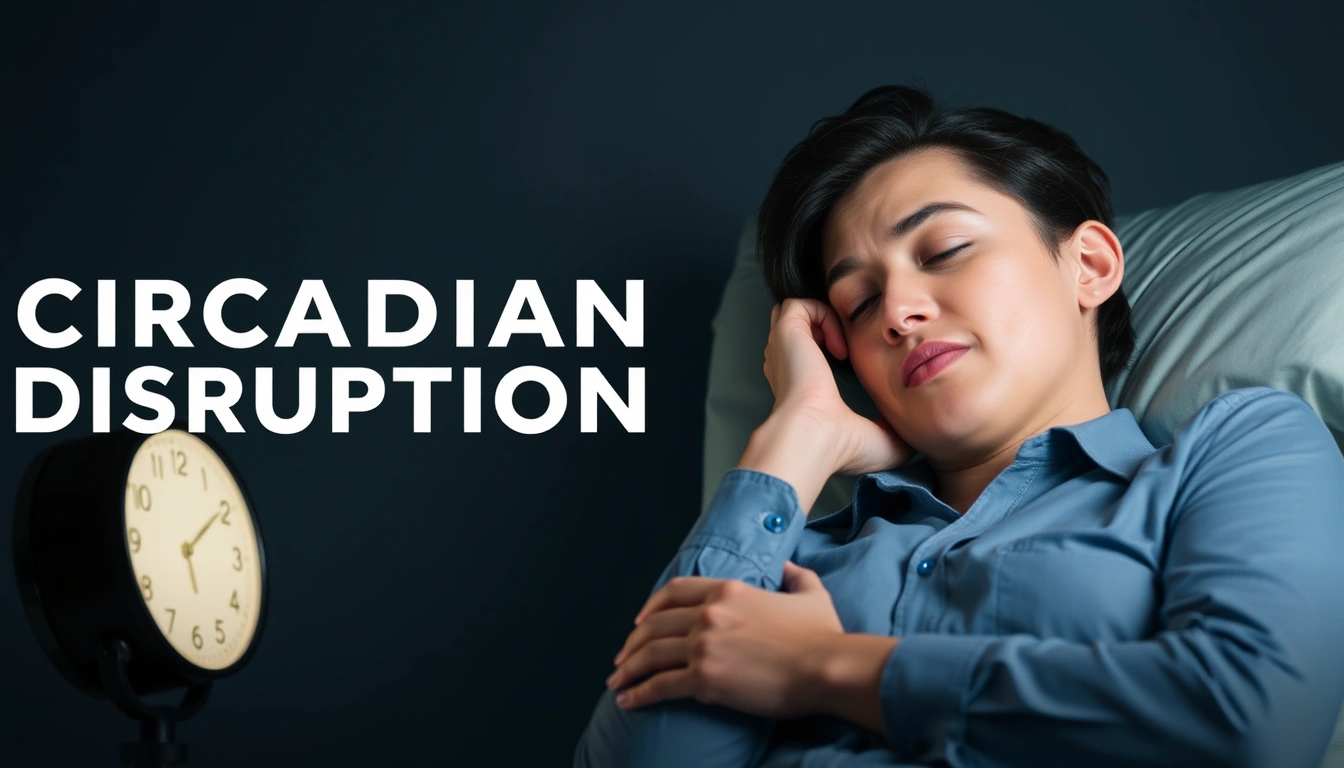
Consider this a map of associations, not a list of certainties. Individual variation is real, and none of the following is a diagnosis.
The epidemiological record is extensive, though. Long-term overnight shift work is associated — across multiple large cohort studies spanning decades — with elevated rates of cardiovascular disease, type 2 diabetes, gastrointestinal disorders, and certain cancers, particularly hormone-sensitive ones. In 2007, the agency responsible for cancer risk classification — IARC, the cancer research body operating under the World Health Organization — placed overnight shift work in Group 2A: probable human carcinogen. That classification is based on population-level risk data and does not imply certainty at the individual level. A 2019 meta-analysis in the British Medical Journal put the elevated coronary heart disease risk at roughly 19% compared to day workers — a number worth sitting with.
Mental health outcomes are documented too. Shift workers report higher rates of depression and anxiety in survey and cohort data. Whether that’s primarily the physiological result of sleep disruption, the social isolation of an inverted schedule, or some combination is still debated — honestly, most researchers favour the combination. Sleep deprivation’s effect on mood and emotional regulation is independently well-established regardless.
Cognitive performance during the shift itself is one consequence that gets less attention than it deserves. Studies measuring reaction time, decision accuracy, and vigilance consistently show impaired performance between roughly 2 a.m. and 6 a.m. — the hours when the biological pressure toward sleep is greatest. Accumulated sleep debt makes that impairment worse. No, willpower doesn’t fix it.
What the Evidence Supports for Managing Circadian Disruption
A quick caveat before the list: none of this replaces a conversation with a physician, sleep specialist, or occupational health professional who knows your history. These are the general areas where research suggests interventions have some effect.
Light management is probably the most evidence-backed tool available. Carefully timed bright light exposure can push the circadian clock forward or backward; research on shift workers suggests that controlled bright light during the overnight shift — at least 2,500 lux for 20–30 minutes — combined with light-blocking glasses on the commute home can help accelerate the body’s shift toward a night-work schedule. The American Academy of Sleep Medicine has published clinical guidelines on shift work disorder covering light therapy in some detail.
Sleep scheduling means protecting the longest possible uninterrupted block — rather than fragmenting it around social and family obligations whenever that’s avoidable. Even a consistent start time for that block, day over day, anchors the rhythm more firmly than variable timing does.
Melatonin comes up constantly in shift work discussions. Research on exogenous melatonin suggests it can advance or delay the sleep window when timed correctly, though its clock-shifting effects are better supported than its ability to extend total sleep duration. A 0.5 mg dose timed to target sleep onset appears in several trials — but dosing, timing, and suitability are questions for a healthcare provider, not a general article.
Diet timing is an emerging area where some research groups have explored whether aligning meals with the waking period — rather than eating heavily during the circadian night — moderates some of the metabolic consequences of shift work. The evidence is preliminary. Still, it follows logically from what is already understood about digestive circadian biology.
The honest limitation of all of this: these approaches mitigate. They don’t neutralise. A rotating schedule running for decades won’t be managed into a fully aligned circadian system through lifestyle tweaks alone — the structural condition, a schedule at odds with biology, doesn’t vanish through personal adjustment.
Who Experiences Circadian Rhythm Disruption Beyond the Classic Night-Shift Worker
Hospital floors and factory lines are the familiar images. But the population dealing with this is broader — approximately 15–20% of the workforce in developed countries works non-standard hours across these and related industries.
Emergency services, aviation crews crossing multiple time zones repeatedly, long-haul trucking, hospitality, retail workers on early or late-closing shifts, on-call workers whose sleep is cut short at unpredictable hours — all experience versions of the same condition, even though the specific timing and predictability of their disruption differ considerably. Because this population spans so many work patterns, research on adaptation is uneven across sectors.
Tech workers in global roles who take calls across widely separated time zones are a growing category, less represented in older studies but increasingly examined. Their disruption is often self-managed and socially invisible; that invisibility tends to delay recognition of its cumulative toll.
There’s also a population for whom the disruption flows from the inside out rather than the outside in: people with delayed sleep phase syndrome (DSPS) or other circadian rhythm sleep-wake disorders are misaligned with conventional schedules even without any external demand forcing it. The mechanism differs from shift work. Some of the physiological consequences, though, overlap — and assessment should involve a sleep specialist.
FAQ
What is circadian rhythm disruption in plain terms? It’s when your internal body clock is out of sync with when you’re actually awake, asleep, eating, and exposed to light. The clock keeps running on its biological schedule; your life keeps overriding it.
Why does it feel worse for night workers than for people who just stay up late occasionally? Duration and repetition. Staying up late once allows recovery. Overnight and rotating shift work keeps the body misaligned chronically, and the partial realignment on days off often restarts the misalignment cycle rather than resolving it.
Is it possible to fully adapt to permanent night shift work? The research is mixed. Some degree of partial adaptation is possible on a fixed schedule. Full adaptation is not well-documented, partly because most overnight workers are regularly exposed to daylight and return to day schedules on days off — both of which reset the clock toward day orientation.
What should I do if I think shift work is affecting my health? Speak to a healthcare professional. A general practitioner, occupational health physician, or sleep specialist can assess whether what you’re experiencing meets criteria for shift work disorder, and can discuss options specific to your schedule, health history, and circumstances.
Are younger shift workers less affected? Age may influence some aspects of circadian adaptation, but the evidence doesn’t support the idea that young workers are simply unaffected. Sleep need runs high in younger adults, and the metabolic and cognitive consequences of disruption appear across age groups in the research literature.
For further reading: the sleep medicine guidelines body (aasm.org) publishes clinical resources on shift work disorder, and the National Institute of General Medical Sciences (nigms.nih.gov) maintains an accessible overview of circadian rhythm research.

Leave a Reply