What to Pack in a Day Sleep Kit for Travel or Temporary Housing

Last updated: November 01, 2026
Quick answer: pack 5 core items in a day sleep kit for travel or temporary housing — a sleep mask, earplugs, a travel pillow, a portable light-blocking layer, and a portable fan. A day sleep kit for travel or temporary housing is the small set of items that helps a shift worker sleep in a hotel, crash pad, or shared room when the sun is up and the room was never designed for daytime rest. The goal is not luxury; it is enough darkness, quiet, and comfort to get a usable block of sleep.
Day sleep kit for shift workers: the core items that do the work
A practical day sleep travel kit starts with five things: a sleep mask, earplugs, a travel pillow, a portable light-blocking layer, and a portable fan. Those are the pieces that solve the three biggest problems in temporary housing: light, noise, and temperature. For background on room-darkening and sleep timing, the National Sleep Foundation and the CDC both note that light and routine affect sleep quality and circadian timing. National Sleep Foundation, CDC sleep and sleep hygiene.
A generic bag of “sleep stuff” often fails because it ignores where the sleep happens. In a hotel, the problem may be sunlight through thin curtains and hallway noise. In a crash pad, the problem may be shared lights, doors, and people moving through the space. In temporary housing, you usually cannot change the room itself, so the kit has to create a sleep zone inside it. For related room setup ideas, see Sleep Environment & Daytime Sleep Optimization — The Complete Guide.
The most useful version of the kit is compact. If it fits in a backpack or one small tote, it is more likely to be used every time. If it needs a separate suitcase, the kit starts losing the convenience that makes it valuable.
Here is the core loadout I would build first:
- Sleep mask for direct light blocking, especially if the room has gaps around the curtains.
- Earplugs for mechanical noise, voices, elevators, and hallway traffic.
- Travel pillow for neck support when the bed, couch, or recliner is not ideal.
- Blackout clip-on curtain or other portable light blocker for rooms with weak shades.
- Portable fan for airflow, white-noise-like hum, and a cooler sleep surface.
That list is not meant to be fancy. It is meant to be repeatable. If one piece is missing, the whole setup feels weaker. If all five are in the bag, the room becomes workable faster.
The strongest version of this kit is not “everything that might help.” It is the minimum set that solves the day-sleep problem without adding clutter.
What should I bring to sleep during the day away from home?
Bring the few items that let you control light, sound, and heat in a room you do not own. That usually means a sleep mask, earplugs, a travel pillow, and one portable light-blocking tool such as a blackout clip-on curtain or a large clip-on shade. If you want a broader checklist, start with shift worker sleep tips and then narrow it to the room you will actually use.
A good rule is to pack for the room you will actually face, not the room you hope for. A quiet hotel near an airport and a crowded crash pad need different levels of backup, but both need the same basics. If your schedule keeps you sleeping in 4-hour to 8-hour blocks during the day, the kit should make setup fast enough that you can use it on tired autopilot.
An effective pack-out looks like this:
- Start with the light blocker. Put a sleep mask in the outer pocket and, if space allows, pack a blackout clip-on curtain or a portable panel that attaches without tools. The result should be a darker sleep space in under 5 minutes.
- Add earplugs in a hard case. Foam or reusable earplugs are small, but they matter more than their size suggests. The hard case keeps them from disappearing into a toiletry bag or getting crushed.
- Pack a travel pillow that matches your sleep position. A 10- to 14-inch neck pillow works for some people in transit, but for day sleep in a room, a compressible bed pillow insert or a small supportive pillow may be better.
- Include a portable fan if the room runs warm. A fan gives airflow and gives the ear something steady to hear, which can make random sounds less noticeable.
- Add a short sleep-hygiene set. Eye drops if your eyes dry out, a water bottle, and a charger for a phone set to Do Not Disturb. That keeps you from hunting for basics after a night shift.
The trade-off is obvious: every extra item adds weight. A kit that is too large ends up staying in the car or suitcase. A kit that is too thin leaves you awake at 2 p.m. because one noisy door or one strip of daylight broke the room open. For more on lightweight packing, see best travel accessories for overnight shifts.
How to pack a day sleep travel kit without overstuffing it
Pack the kit in layers: first the items you use every time, then the items that solve the room’s specific flaws, then a few backup pieces for the next 12 hours. That keeps the bag small and makes setup fast.
A useful method is to think in three zones inside one pouch or tote.
- Always-with-you zone: sleep mask, earplugs, phone charger, and any medication or health-related item you routinely need for sleep.
- Room-fixing zone: blackout clip-on curtain, portable fan, and any clip or hook that helps attach something without damaging the space.
- Comfort zone: travel pillow, lip balm, eye drops, water bottle, and a lightweight blanket if the room is cold.
The order matters because day sleep often happens when you are already tired. If the kit is organized by use, not by type, setup takes less effort.
A simple packing system:
- Put the sleep mask in a top pocket so it is first out and last in.
- Keep earplugs in a sealed case, not loose in a zipper pouch.
- Roll the blackout curtain or shade around the fan cord or another soft item so it does not crease badly.
- Use one clear pouch for small pieces such as eye drops, charger, and spare batteries if the fan needs them.
- Keep the travel pillow attached to the outside of the bag only if it will not get dirty in transit.
One honest limit: a blackout clip-on curtain may not be enough on its own in every room. Some windows need a better seal than a clip can provide, and some rooms have curtain tracks that make attaching anything awkward. In those cases, the sleep mask becomes the real fallback, not the backup.
If you want a bigger framework for how the room itself should support daytime rest, the hub on Sleep Environment & Daytime Sleep Optimization — The Complete Guide is the right place to start.
What makes a hotel room or crash pad sleep-friendly fast?
A hotel room or crash pad becomes sleep-friendly fastest when I block light first, reduce noise second, and cool the air third. That order matters because the room can feel “good enough” in less than 10 minutes if those three conditions are handled. The CDC and Sleep Foundation both emphasize that sleep environment and routine matter, especially when timing is irregular. CDC sleep and sleep hygiene, Sleep Foundation sleep environment.
The setup works best as a repeatable routine:
- Close the blinds or curtains fully. Use the room’s built-in hardware first. If light still leaks around the edges, hang the blackout clip-on curtain over the gap or use it to cover the brightest section of the window.
- Set the fan before you lie down. Place the portable fan where it moves air across the room, not directly into your face unless you sleep better that way. The steady sound can soften sudden hallway noise.
- Put in earplugs after the room is set. If you insert them too early, you may end up taking them out again while adjusting the room.
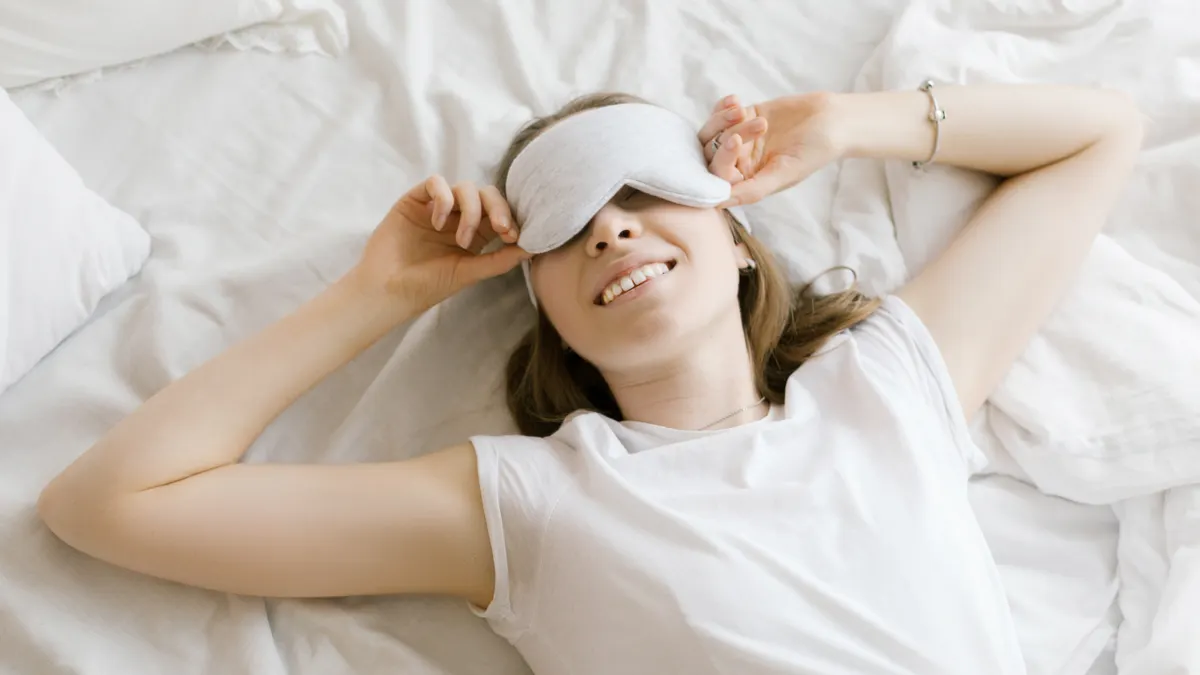
- Put on the sleep mask only when you are ready to stay down. That keeps you from fussing with it while moving around.
- Use the travel pillow or your own pillow to stabilize your neck. In a hotel bed, that may mean stacking one standard pillow and one travel pillow. In a crash pad, it may mean using the pillow to block a draft or support side-sleeping position.
The setup should make the room feel less reactive. You want fewer surprises: less sliver light, less random sound, less heat buildup, fewer reasons to get back up.
A common mistake is packing a kit that looks ideal in theory but needs too much rearranging. If the curtain takes 15 minutes to fit, or the fan needs a counter you may not have, the kit will get skipped. Choose items that work with minimal setup in rooms you do not control.
Sleep hygiene basics on the road that actually belong in the kit
Pack the habits that protect sleep, not just the gear. A day sleep travel kit works better when it also supports the routines that tell your body it is time to shut down.
The most practical basics are small and boring, which is the point:
- Do Not Disturb on your phone so messages do not interrupt the first sleep cycle.
- A charger and short cable so you do not wake up hunting for power.
- Water bottle so you do not get up for a drink right after lying down.
- Light snack if needed for the hour before bed, especially after a shift that ends late or early.
- Toiletry basics such as toothbrush and face wash if you sleep better after cleaning up.
The real benefit here is not self-care language; it is fewer wake-ups. If you have to leave the bed twice because the phone is dying and the charger is across the room, the kit failed at a basic level.
There is also a timing trade-off. A strong sleep kit helps, but it does not erase poor timing. Caffeine late in a shift can still make day sleep harder. Bright light on the way back from work can still keep you alert. If sleep is becoming consistently difficult despite a solid setup, a sleep specialist or other qualified health professional can help sort out whether the problem is environmental, schedule-related, or medical.
That said, this kit is not for someone trying to recreate a perfect bedroom in a suitcase. It is for the person who needs a decent sleep window in a room that was never built for it. For broader context on shift work and sleep timing, see shift work sleep disorder basics.
What should not go in a day sleep kit
Do not pack bulky, fragile, or high-maintenance items that sound useful but fail in a hotel, crash pad, or shared room. The kit is for temporary housing, which means the gear has to be quick, portable, and forgiving.
The usual overpacking mistakes are:
- Heavy bedding. A full-size comforter takes too much space for too little payoff unless the room is routinely cold.
- Complicated electronics. If a gadget needs charging, pairing, or app control before it works, it will frustrate you when you are tired.
- Loose small items. Random clips, adapters, and spare pieces get lost fast in shared housing.
- Anything that damages the room. Permanent adhesive, nails, or hardware changes are a bad fit for temporary spaces.
- Too many “maybe” items. If you have not used it in the last few trips, it probably does not belong in the core kit.
The cost of overpacking is not just weight. It is decision fatigue. A cluttered bag slows setup, and slow setup is what turns a 30-minute wind-down into a 90-minute struggle.
There is also a social reality in shared housing: a kit that spreads out across a table, floor, and outlet becomes a nuisance. Keep the system compact enough that it can be unpacked, used, and repacked without taking over someone else’s space.
My position is simple: a day sleep kit should be portable first and clever second. If a solution looks impressive but does not fit in one bag, it is probably wrong for shift workers who move between rooms.
A simple packing checklist for the night before a shift
Use one small checklist so the kit is ready before you are tired. The less you have to think, the more likely it is that the setup will happen the same way every time.
A straightforward checklist:
- Sleep mask
- Earplugs in a case
- Travel pillow
- Blackout clip-on curtain or other portable light blocker
- Portable fan
- Charger and cable
- Water bottle
- Do Not Disturb-ready phone setting
- Toiletry basics for winding down
If you use prescription medication or have a medical reason for a specific sleep setup, keep that separate and easy to reach. If you have hearing, breathing, or other health concerns that change what earplugs, masks, or fans are safe or comfortable for you, ask a qualified professional before changing your routine.
A day sleep kit should feel practical in the best way. It should not surprise you, slow you down, or take over your bag. It should let you arrive, darken the room, cut the noise, and get to sleep without turning a temporary room into a project.
Key Takeaways
- Build the kit around light control, noise reduction, and comfort, not around novelty gear.
- Pack a sleep mask, earplugs, travel pillow, blackout clip-on curtain, and portable fan before anything else.
- Keep the kit small enough to use in a hotel, crash pad, or shared room without rearranging the whole space.
- Add only the extras that make sleep easier in transit: charger, water bottle, and a few wind-down basics.
- Leave out bulky or complicated items that slow setup or depend on permanent changes.
What should i bring to sleep during the day away from home?
Bring the basics that let you block light, soften noise, and stay comfortable in a room you do not control. A sleep mask, earplugs, a travel pillow, and one portable light-blocking tool are the core items. If the room tends to be warm, add a portable fan and a charger so you can settle in quickly.
How do I make a hotel room sleep-friendly after a night shift?
Make the room darker, quieter, and cooler in that order. Close the curtains, add a blackout clip-on curtain if light leaks around the edges, set up the portable fan, and then use earplugs and a sleep mask. Keep your phone on Do Not Disturb and place water and chargers within reach before you lie down.
What belongs in a shift worker sleep kit?
A shift worker sleep kit should include a sleep mask, earplugs, a travel pillow, a portable light blocker, and a portable fan. Add small support items such as a charger, water bottle, and toiletry basics. The best kit is compact, repeatable, and built for temporary housing where you cannot change the room itself.
Drafted with AI; not yet reviewed by a person.